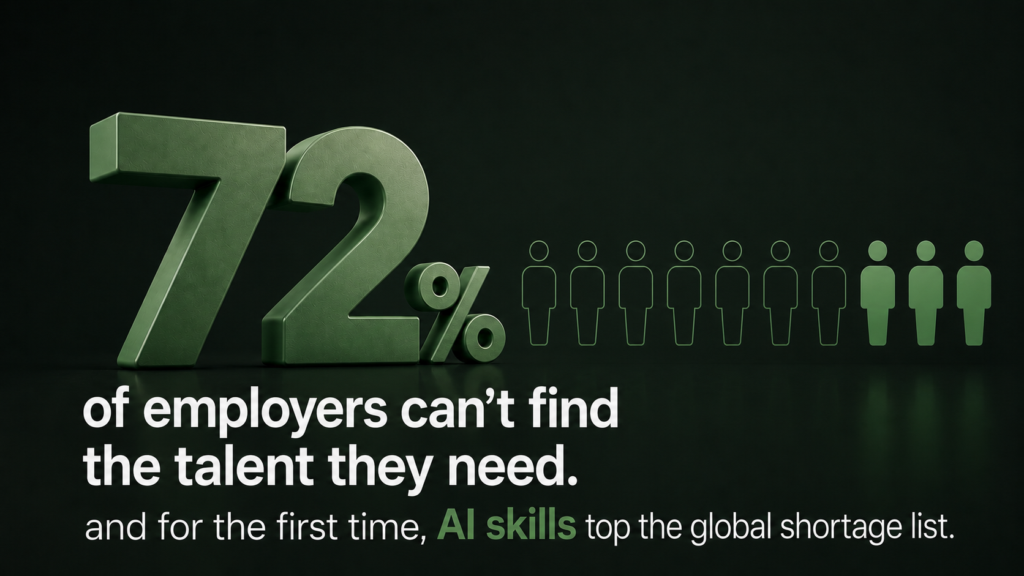
AI talent marketplaces are becoming a go-to answer for companies trying to find the right people for AI work, and a large part of this is because hiring is turning into a numbers game that neither side can easily win.
Job seekers can now pay about $29 a month for an AI agent that reads their resume, finds openings, writes cover letters, and applies to hundreds of jobs at once. Meanwhile, recruiters face the other side of that problem. They can have over 400 applications for one role and are using AI to sort through them.

But under all that volume is a basic question. Are companies actually assessing the person they think they are?
Digging a little deeper shows just how noisy the process has become. In one senior engineering role, roughly 100 of the 827 applications came from people using fake identities.
On one side, identity checks need to be put in place. But on top of that, companies need to know whether a real candidate can actually do the work.
Take hiring for AI roles. This gets trickier fast because the right person may not have an AI background at all. In fact, one analysis of more than 1.3 billion job postings found that 51% of job postings requiring AI skills were outside IT and computer science occupations.
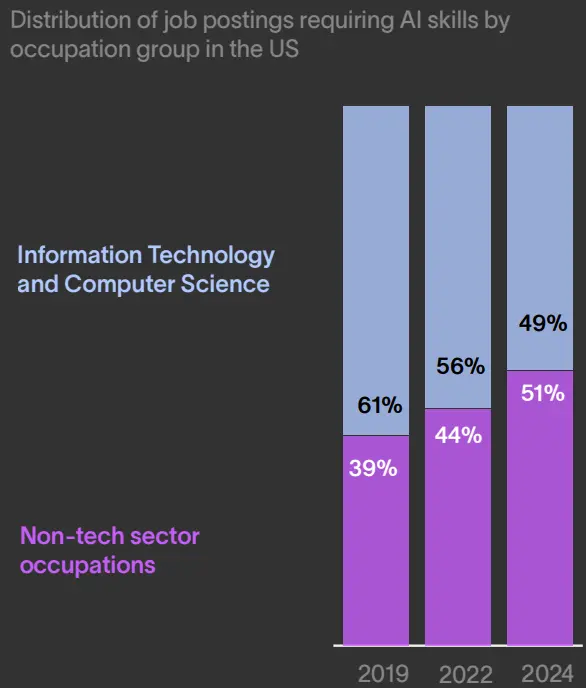
That changes who companies need to hire. The people shaping AI systems are often specialists in the fields their data comes from, not just engineers.
These hires are crucial because AI systems learn from the data people label and evaluate. Get them wrong, and the mistake doesn’t stay in one deliverable. It can become part of what the model learns.
An AI talent marketplace helps by checking who someone is and what they can do before work starts. That gives companies vetted AI talent instead of a list of profiles.
In this article, we’ll look at what an AI talent marketplace is, how these platforms vet experts, and what to look for when choosing one, whether you’re hiring or looking for work.
Exploring What an AI Talent Marketplace Is
An AI talent marketplace connects companies with AI specialists and verifies them before they take on projects. The idea is simple: you can’t tell whether someone is right for AI work by reading about their past work.
That is what separates it from the tools most teams reach for first. On a general freelance platform, anyone can create a profile and bid, so you only find out about the quality of their work after hiring. A staffing agency screens candidates, but you can’t see how it is done.
On the other hand, a job board generates volume without much filtering. More applications don’t mean more signals.
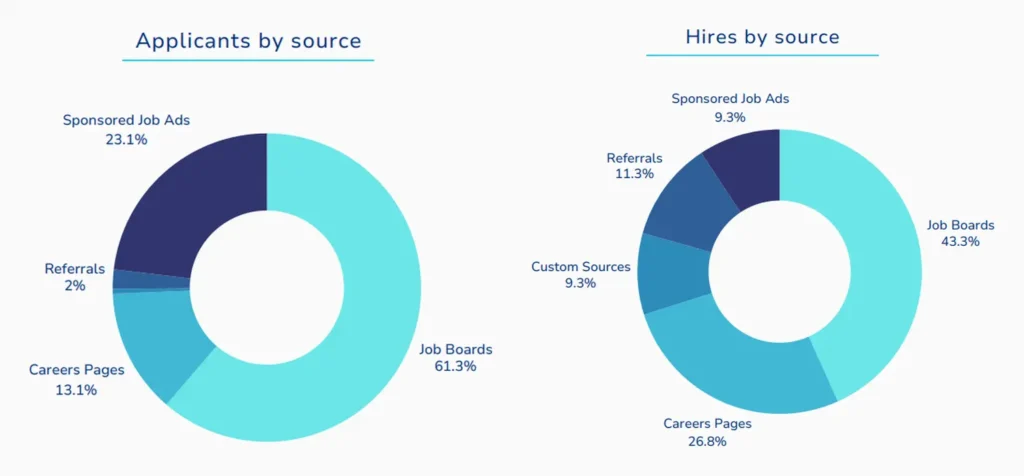
On an AI talent marketplace, that order is reversed. Experts are verified and assessed before companies ever see a shortlist, so the shortlist itself is the output of the vetting.
Why Traditional Hiring Fails for AI Work
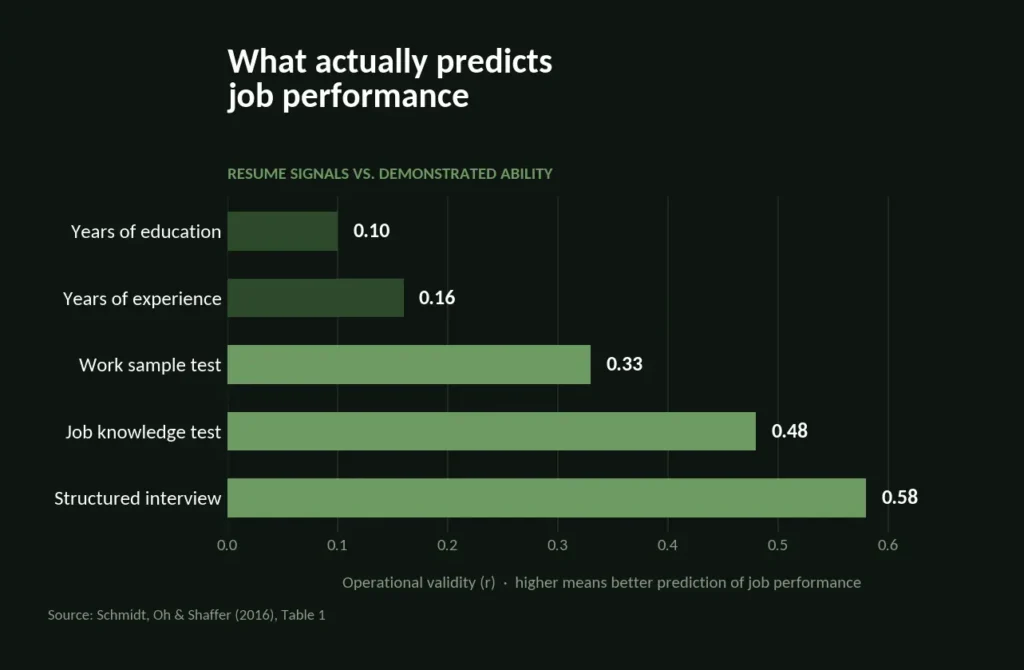
A resume tells you what someone has done. It lists the tools they have used, the teams they have worked with, and how long they stayed. What it can’t tell you is whether they will get the difficult decisions right.
That gap has been measured. A 100-year meta-analysis of hiring methods found that years of experience and education are among the weakest predictors of job performance. Seeing what someone can actually do is a much better predictor.
Yet employers rarely double-check their hiring strategies. A 2025 benchmarking survey of 2,371 HR leaders found only 20% measure the quality of their hires, while 61% called finding qualified candidates a problem.
AI hiring adds another layer to the problem. The hardest calls are often not about AI itself. They are about the subject the data describes and whether the person labeling it knows that subject well enough to get a borderline case right.
For example, a biomedical annotation study found that models trained on 1,000 expert-labeled abstracts outperformed those trained on 5,000 crowd-labeled ones. Five times more data couldn’t compensate for less expertise.
That is why hiring AI experts on reputation alone rarely works. Not every task needs a specialist, but when the material is ambiguous, getting it right depends on domain knowledge.
We ran into this ourselves. We built Liceum.ai, our AI talent marketplace, after seeing that a strong resume didn’t always translate into strong performance. We responded by moving beyond resume screening to verify identity upfront and assess candidates through real-world tasks.
How AI Talent Marketplaces Vet Experts
“Vetted” is one of the most common words you will see on an AI expert marketplace, but it can mean different things. Vetting refers to checking two things before someone starts. Are they who they say they are, and can they do the work? Most platforms only check the second.
Here’s what each check actually involves:
- Identity Verification: This confirms that the person doing the work is the person who applied. A government-issued ID is checked against a live biometric before they get access to a project.
- Capability Assessment: It tests whether someone can actually do the work, not just describe their experience. For example, a data annotator may complete a short sample task so the team can review the quality and consistency of their work before scaling the project.
So, does identity verification really make a difference? On other traditional hiring platforms, a low acceptance rate can sound impressive.
One major platform says it accepts fewer than 3% of applicants after several rounds of screening. But a low acceptance rate doesn’t tell you whether candidates’ identities were actually verified. It only tells you how many people made it through the screening process.
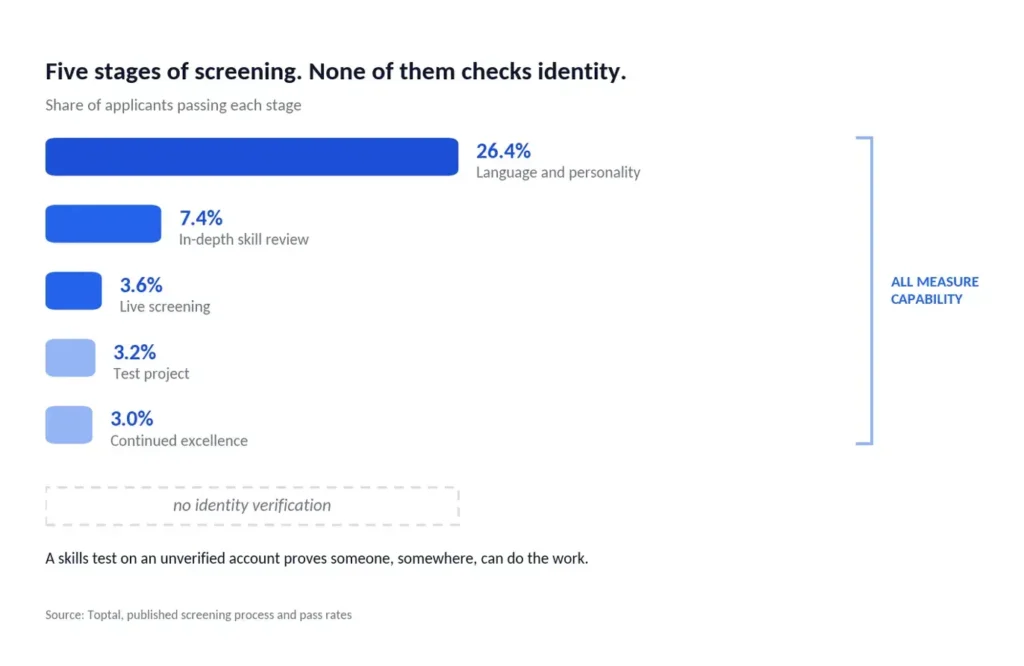
That distinction is key. In a January 2025 indictment, the U.S. Justice Department alleged that a group using forged passports obtained remote IT work at 64 U.S. companies. The case shows why standard recruiting steps such as interviews and screening may not be enough to confirm who is actually completing the work.
Identity verification is becoming an increasingly important part of the hiring process. One industry forecast predicts that one in four candidate profiles worldwide could be fake by 2028 and recommends building identity verification into hiring rather than leaving it until later.
So when a platform says it offers vetted AI talent, look at what its assessment actually checks. For AI projects, that can mean testing candidates on real tasks, such as applying a labeling protocol to edge cases and seeing how they handle difficult decisions.
What You Can Hire AI Experts For
When you hire AI experts, the work can involve much more than building models. Many AI projects rely on people who work directly with the data, evaluate model outputs, or bring specialized knowledge to the process.

Here’s a closer look at the roles teams hire for:
- Data Annotators: They label the data a model learns from, like drawing boxes on a scan, tagging dates in a contract, or transcribing accented speech.
- LLM Evaluators: They review model outputs and score them against a rubric. A response can sound right and still be wrong, so they need to know the subject.
- RLHF Specialists: They compare model responses and choose which one is better. Those choices teach the model what a good answer looks like, which makes this one of the most important roles on the list.
- Prompt and Evaluation Specialists: They write the instructions a system follows and build the tests that check it works. Writing the prompt is the easy part.
- Domain Experts: These are the clinicians, contract lawyers, and linguists who handle the calls nobody else can make. You might only need them for one part of a project.
The type of project is a factor as well. A one-off evaluation has a clear scope and end date, like checking a model’s outputs before launch. Ongoing data annotation can run for months and works better when the same people stay on it. A new group may read the same guidelines differently.
An embedded specialist works a little differently. They join your team part-time and help with difficult cases as they come up. The same expert may fit different types of projects, so it is better to define the work first and then choose the right role.
How to Work as an AI Expert on a Marketplace
AI work can involve a range of skills beyond machine learning, including data annotation, LLM evaluation, prompt engineering, MLOps, and specialized domain expertise.
Getting started varies by AI talent marketplace. On Liceum.ai, experts are sourced based on their academic, research, or industry experience and complete identity verification before accessing projects.
Once a team identifies a potential match, it can assess the expert through a real project task. For example, a team working on medical AI could ask candidates to annotate radiology images and evaluate their work against its own criteria.
If the expert is selected, the project moves forward with an agreed scope, milestones, and payment terms. Liceum.ai also handles review and approval before payment is released.
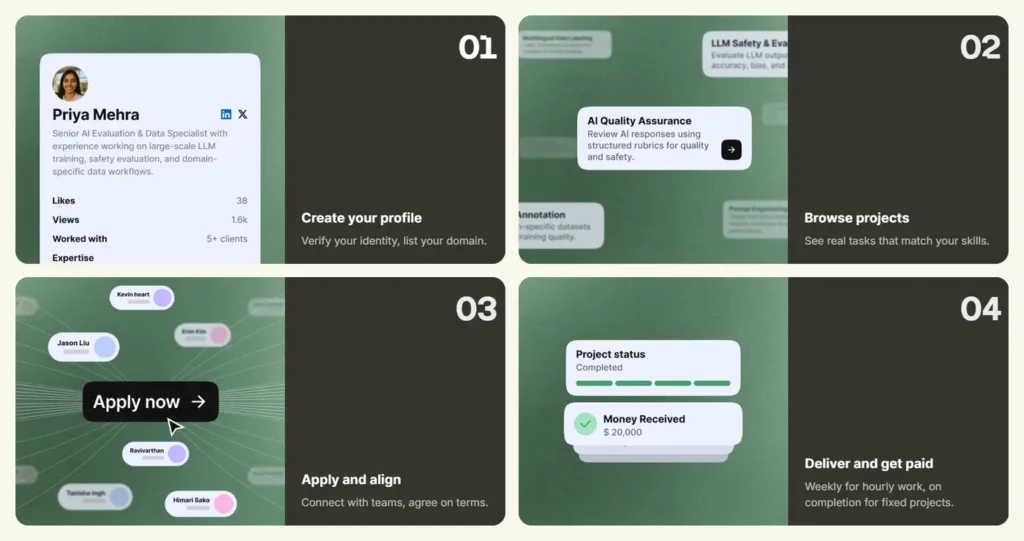
The key difference is that experts are evaluated on both who they are and how they perform on the work itself, rather than relying on a profile or resume alone.
What to Look for in an AI Talent Marketplace
Still confused about how to choose an AI talent marketplace? Many platforms describe themselves in similar ways. Whether a site calls itself an AI expert marketplace or an AI talent platform, here are a few things to check:
- Depth of Verification: Check when identity is verified. It should happen before an expert can see your project.
- Domain Coverage: Look at how many experts they have in your field, not just their total AI talent. The two numbers can differ significantly.
- Assessment Transparency: Make sure you can set the task and see the results. If you can’t see how someone was assessed, you have to take the platform’s word for it.
- Payment Protection: Check when the expert gets paid and who holds the money until the work is approved. It protects you, and it stops good experts from treating your project as a risk.
- Dispute Handling: Find out how disagreements are resolved and whether there is an independent review process.
These simple checks can tell you a lot. A platform built around vetted AI talent can answer them straight away.
Where AI Hiring Goes From Here
AI hiring is a problem of evidence. A profile can’t tell you if someone is real, and a resume can’t show how they will handle a difficult decision. In AI work, those decisions end up inside the model.
An AI talent marketplace checks both before work starts. Is the person real, and can they do the work? When choosing one, look at how experts are verified, how many experts it has in your field, and how they are assessed.
The same applies if you are the expert. If your value comes from deep domain knowledge, being tested on real work gives your skills more weight than bidding.
Building an AI team? Hire verified AI talent on Liceum.ai and get matched with domain experts, no bidding, no guesswork.
Are you an expert? Find real AI work at Liceum.ai and get paid fairly for your skills.
Frequently Asked Questions
What is an AI marketplace?
How much does it cost to hire AI experts?
What does vetted mean for a job?
What is AI talent?