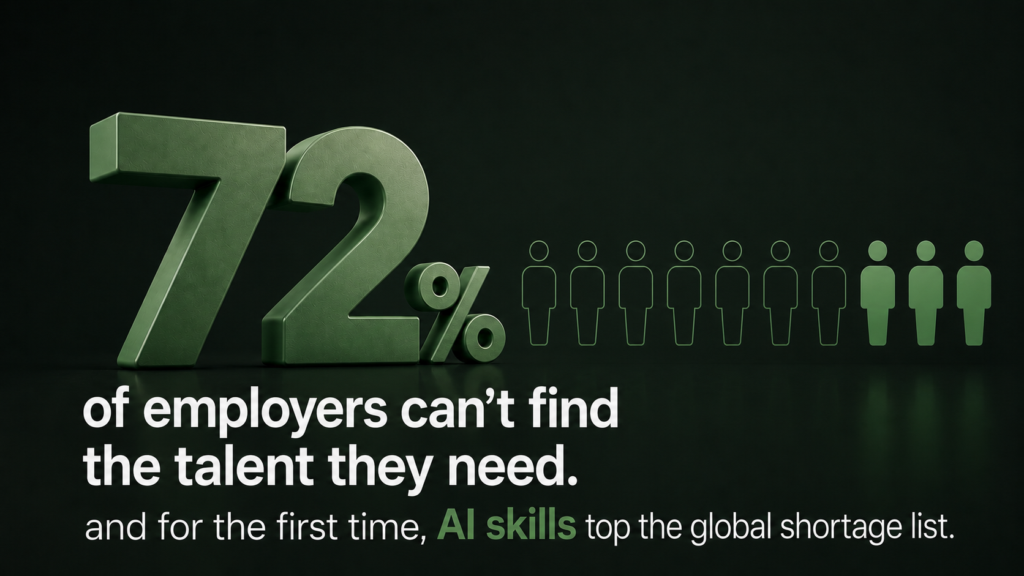
94% of business leaders are facing AI-specific skill gaps in their organizations. This is becoming a critical problem as AI systems are starting to play a huge role in how companies function. Simply put, finding the right people to build, manage, and work with AI systems isn’t straightforward.
The problem isn’t a lack of AI professionals. It’s a mismatch between the skills workers have and what companies need. As AI changes existing roles and creates new ones, employers increasingly need skills such as evaluating AI outputs, building AI workflows, working with data, and keeping AI systems safe and reliable.

The AI skill gap is a major challenge for many businesses that want to grow. In fact, 63% of employers identify skills gaps as a major barrier to business transformation. And that demand for new capabilities is growing faster than workforces can adapt.
Universities are also updating their programs to keep pace with AI and changing job demands. In China, for example, universities have cut thousands of outdated degree programs as they prepare for an AI-driven economy.
In this article, we’ll explore the most in-demand AI skills in 2026, and why companies are struggling to find people with these skills. We’ll also learn more about these roles and how both workers and employers can respond.
What Changed in AI Skills Demand in 2026?
In 2026, the focus has shifted from simply building AI models to making AI work reliably in real-world business environments. Most businesses are looking to adopt AI agents. So, companies need people who can put AI agentic systems into production, connect them to company data and tools, evaluate their outputs, and ensure they are safe and reliable.
This shift is already underway; 57% of organizations already have AI agents in production. Stanford’s 2026 AI Index also shows rapidly growing demand for agent-related skills, with the share of AI job postings mentioning “Agentic AI” rising from 0.69% to 18.9%.
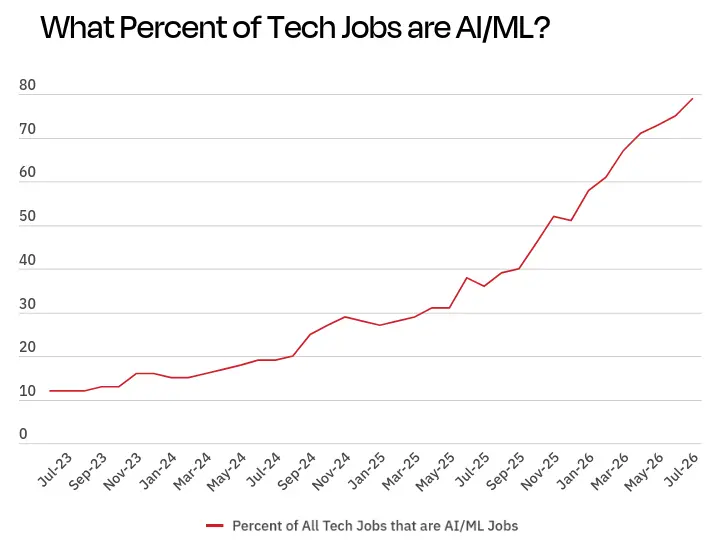
This is creating greater demand this year for skills in areas such as context engineering, AI evaluation, retrieval systems, tool integration, and agentic workflows. Recent hiring data also shows that AI skills are becoming a core requirement across the tech industry, highlighting the growing gap between what companies need and the skills currently available.
The Most in-Demand AI Skills in 2026
Now that we’ve covered what changed in 2026, let’s see the most in-demand AI skills in 2026, why companies need them, and which skills are driving hiring demand:
- LLM evaluation and output testing: AI/ML engineers test AI responses for accuracy, reliability, and consistency. These AI skills are becoming increasingly important as companies deploy AI systems in real-world environments. AI or ML engineering roles can pay around $138,000 to $204,000 per year.
- Prompt and context engineering: Prompt and context engineers design effective instructions and manage the information AI models use. Prompt engineering roles can pay around $132,000 to $195,000 per year.
- RAG and retrieval system design: Machine learning engineers build retrieval systems that help AI find and use relevant information from company data. These AI skills are increasingly in demand as businesses connect AI models to their own knowledge bases. Related machine learning engineering roles can pay around $140,000 to $209,000 per year.
- Agent orchestration and tool use: AI engineers build agents that use APIs, tools, and data to complete multi-step tasks. These skills are becoming increasingly important as companies adopt AI agents. AI engineering roles can pay around $138,000 to $204,000 per year.
- Domain-specific data annotation and curation: Data specialists prepare and review specialized AI data using industry expertise. Pay varies widely depending on the industry and level of technical knowledge required.
- Fine-tuning and RLHF: Machine learning specialists adapt AI models for specific tasks and improve them through human feedback. Specialized machine learning roles can pay around $140,000 to $209,000 per year.
- AI safety, guardrails, and red-teaming: AI safety specialists identify risks and test AI systems for harmful or unreliable behavior. These skills are increasingly in demand as companies deploy AI at scale. Specialized AI roles can pay around $138,000 to $204,000 or more per year.
- MLOps and AI infrastructure: MLOps professionals deploy, monitor, and maintain AI systems in production. These skills are becoming more important as companies move AI from experimentation into real-world use. MLOps roles can pay around $135,000 to $204,000 per year.
- AI governance and compliance: AI governance professionals ensure AI systems follow company policies, regulations, and risk requirements. These roles can pay around $113,000 to $176,000 per year.
Which AI Skills That Are in Demand Pay the Most?
Pay varies by location and experience, but there is a clear pattern. Skills such as AI evaluation, safety, governance, research, and advanced machine learning and engineering roles tend to be more valuable as they are harder to find and directly support real-world AI deployment.
For instance, PwC’s 2026 AI Jobs Barometer found that jobs requiring AI skills carried an average 62% wage premium, up from 57% the previous year. The report also found that AI skills are becoming especially valuable when combined with human expertise such as judgment, creativity, leadership, and industry knowledge.
This means the highest-value AI professionals aren’t necessarily those with the most technical skills. The best combination is often specialized AI knowledge plus expertise that is difficult to replace or automate.
Technical AI Skills vs. Domain Expertise
The most impactful AI professionals combine technical AI skills with deep expertise in a specific industry. This combination enables them to apply AI effectively while understanding the real-world context, risks, and requirements of their field.
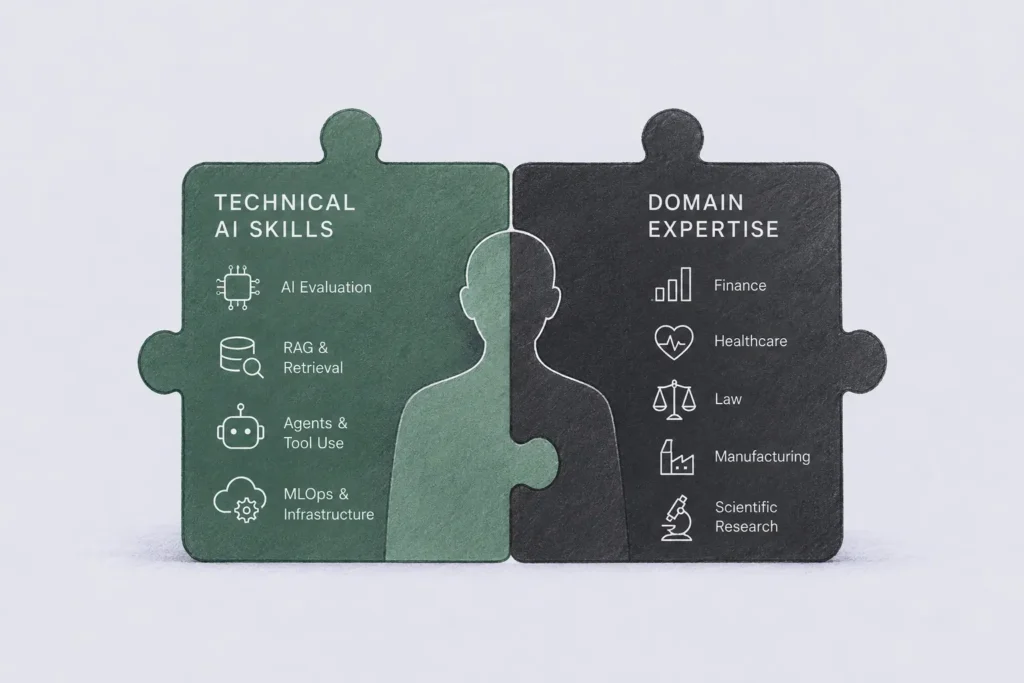
For example, a financial analyst who understands AI can better judge whether an AI-generated risk assessment makes sense, identify errors, and apply the results to real business decisions. The same combination is also critical in areas like healthcare, law, finance, manufacturing, and scientific research, and demand for AI skills is spreading across these industries.
How to Build In-Demand AI Skills in 2026
For technical professionals, the next step is to build on their existing model development skills by learning how AI systems work in production. This includes skills such as AI evaluation, RAG, agents, tool integration, MLOps, and AI safety. These skills are increasingly appearing in real-world hiring requirements. In fact, a 2026 analysis of 390 AI engineer job postings found that 56% mentioned AI evaluation, 50% mentioned AI agents, and 26% required RAG.
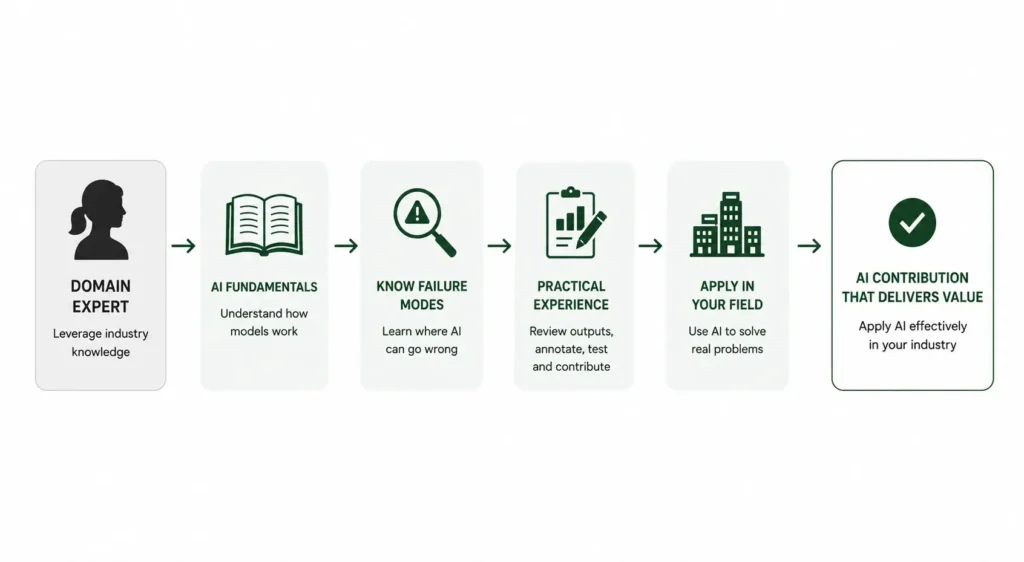
For domain experts, becoming an ML engineer isn’t necessary. Instead, they can learn how AI models work, where they can fail, and how they can be applied to their field. Practical experience can come from reviewing AI outputs, annotating specialist data, testing models, or contributing to AI projects in their industry.
The need for these skills is also clear from how companies are deploying AI agents. Among organizations using agents, 32% identified quality as a major production challenge. While 89% had implemented observability, only 52% had adopted evaluations, highlighting the growing need for people who can test, monitor, and improve AI systems.
How Companies Can Hire for In-Demand AI Skills
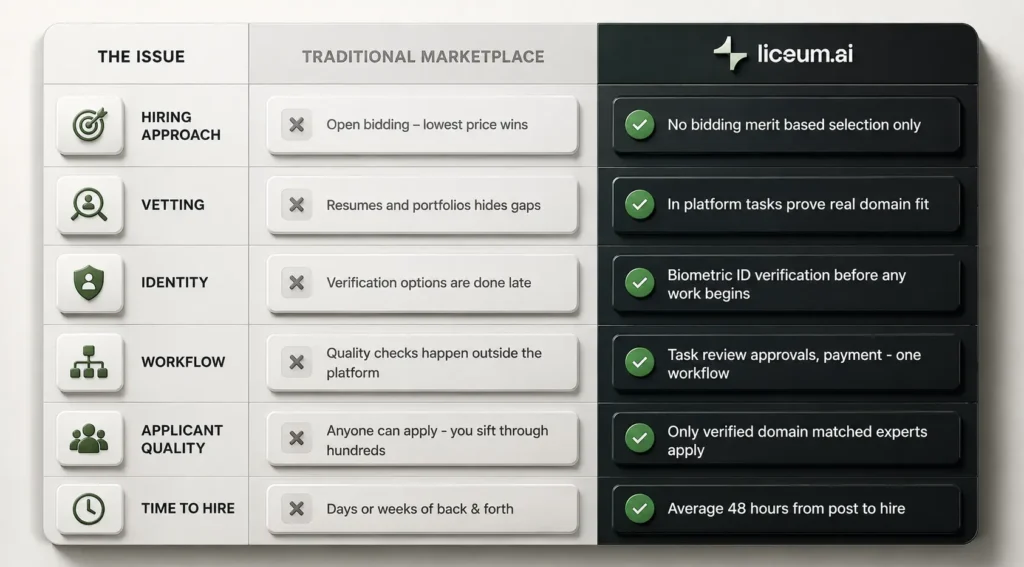
Traditional hiring often makes use of job titles, resumes, and keyword matching, but that doesn’t always show whether a candidate can actually work with AI. As AI roles become more specialized, companies need better ways to assess practical skills and demonstrated ability.
An assessment-first approach can help. Instead of relying only on resumes and interviews, employers can give candidates realistic tasks, such as evaluating AI outputs, building a RAG workflow, reviewing specialized data, or identifying model failures. These assessments provide clearer evidence of what candidates can actually do.
Cutting-edge AI hiring platforms are using similar role-specific assessments and work simulations to measure practical AI skills. Platforms such as Liceum.ai can support this approach by helping companies identify specialists based on demonstrated skills and practical assessments rather than relying on just keywords.
The AI Skills That Matter Most in 2026
The AI skills in demand in 2026 are moving steadily toward practical and real-world applications. Companies need professionals who can make AI useful, reliable, and safe, with skills in areas such as AI evaluation, RAG, agents, infrastructure, safety, governance, and domain expertise.
For professionals, the opportunity is to combine practical AI skills with existing industry knowledge. For companies, it means assessing candidates based on what they can actually do, not just what their resumes say.
If you’re building in-demand AI skills or hiring AI talent, Liceum.ai can help you get started.
Frequently Asked Questions
What AI skills are in demand in 2026?
Which AI skills are most in demand?
Which AI job is high-paying?
Is AI a good career in 2030?